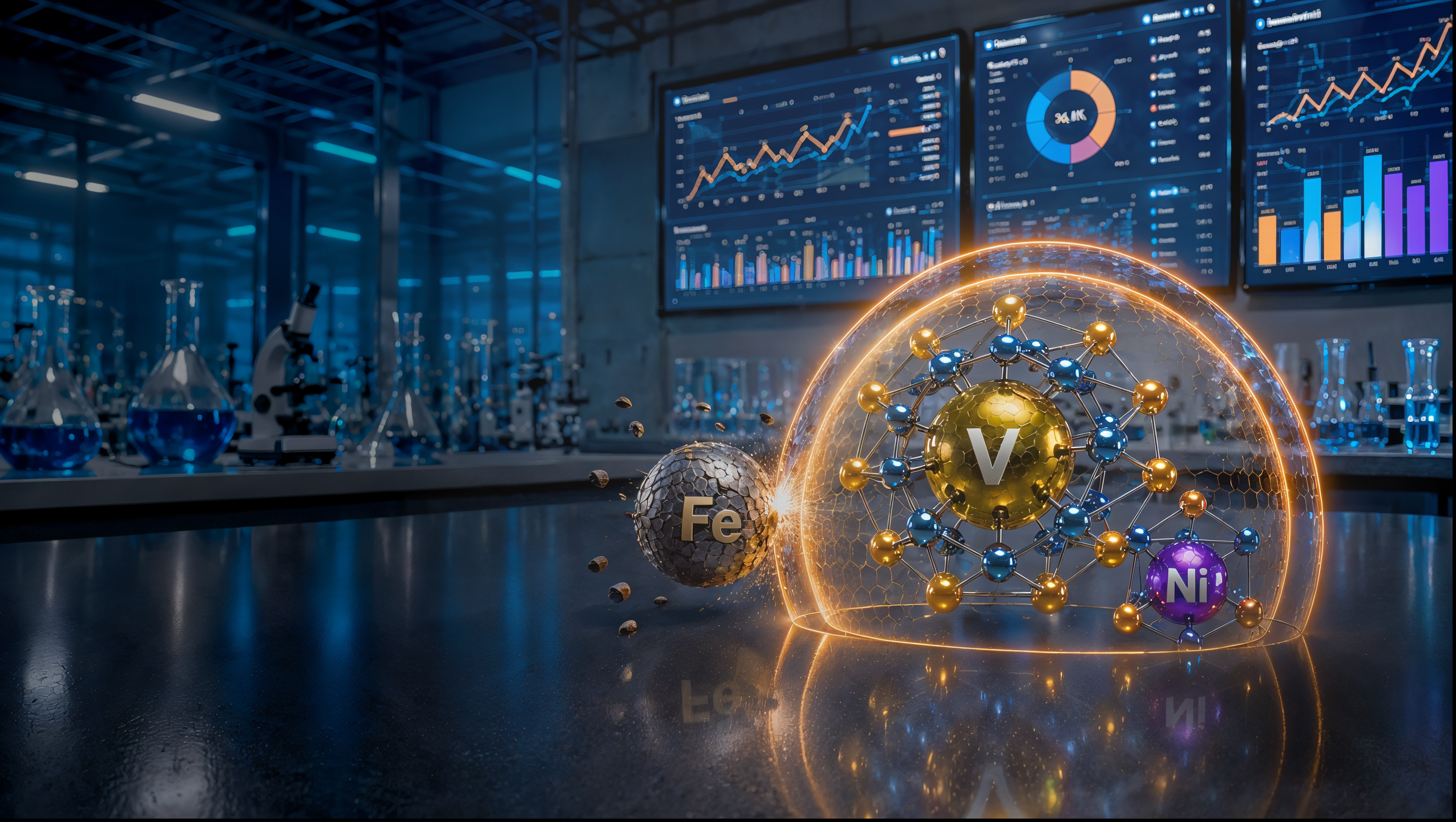
The processing of increasingly heavy residual feeds with high levels of metallic contaminants is now a reality for a large part of catalytic cracking units. Among these contaminants, vanadium stands out as one of the main agents of catalyst deactivation. During regeneration, vanadium is oxidized and forms highly mobile species capable of migrating into the catalyst particle and promoting the degradation of the zeolite crystal structure, which is primarily responsible for the cracking activity. As a consequence, there is less conversion, decreased yield of higher value-added products, and an increase in the consumption of fresh catalyst to maintain the unit's performance.
Developed by Ketjen and FCCSA, the V-KETCH™ was designed to minimize the effects of vanadium contamination, acting as a selective trap that reduces its interaction with zeolite. In this way, it helps preserve catalytic activity and increase the operational flexibility of the unit, allowing the processing of feeds with higher vanadium content without increasing the rate of fresh catalyst addition to maintain UFCC performance.